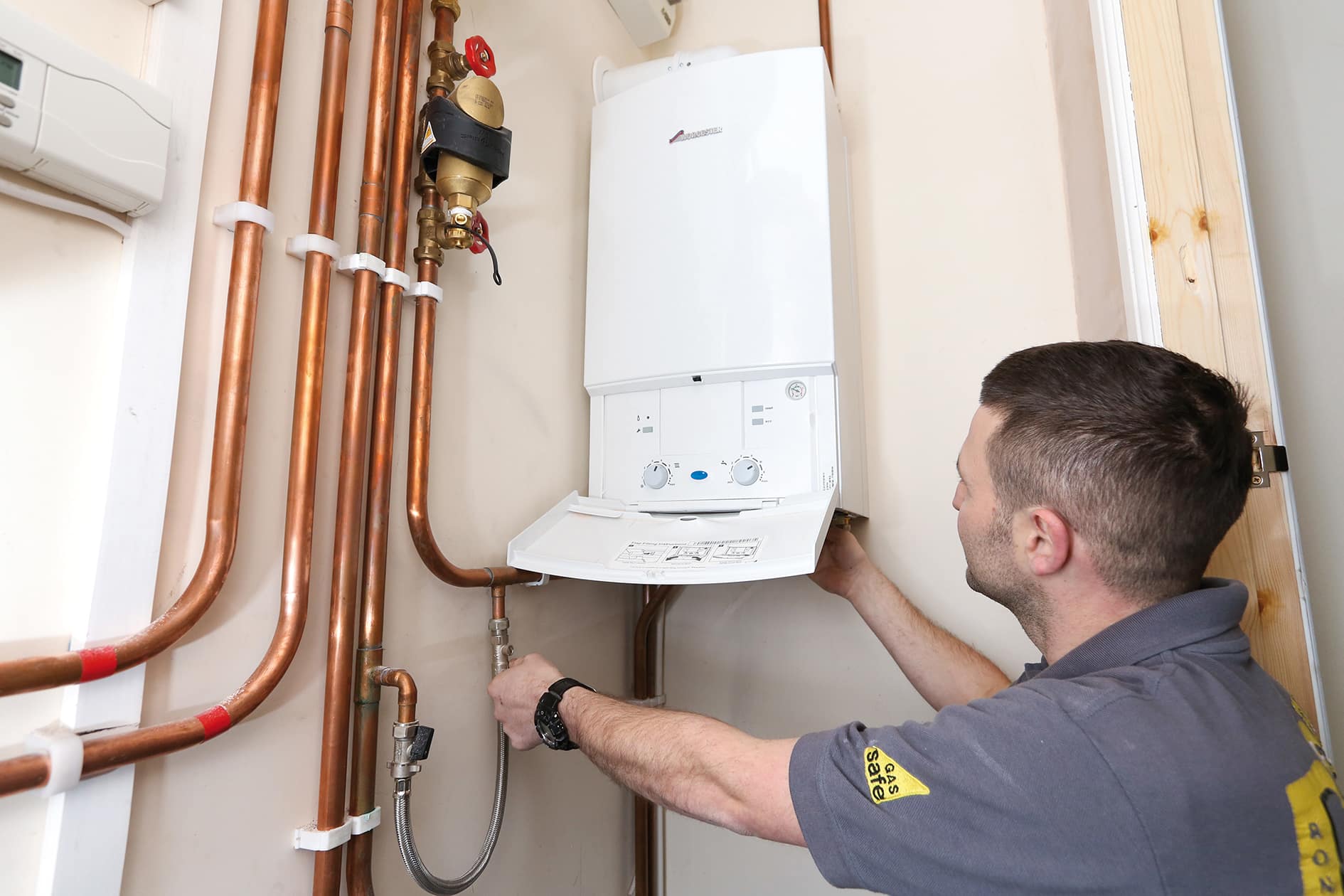

If you run a home services, home improvement, or home products business, you almost certainly believe you have a data problem. Not enough of it. Not clean enough. Not connected enough. The honest diagnosis, though, is different: you don’t have a data shortage. You have a data infrastructure problem — and it’s costing you far more than you realise.
UK home-centric businesses — from boiler installers and home lift manufacturers to subscription water systems and home improvement finance providers — are operating in one of the most data-rich environments in any consumer sector. Every property in England and Wales has a publicly available Energy Performance Certificate. The Land Registry publishes transaction history by address. The Office for National Statistics maps household income, deprivation, and demographics down to 1,500-household neighbourhood units.
Layer your own CRM and operational data on top of that, and you have a predictive intelligence capability that most of your competitors have never thought to build. The barrier isn’t data. It’s that most home services companies are still extracting CSVs from their ERP, pivoting them in Excel, and making decisions 24 hours after the data stopped being current. This article explains how to fix that — and what becomes possible when you do.
The Short Answer
Home services and home products businesses that build a proper data foundation — connecting their core systems into a unified data warehouse — and layer publicly available UK property data on top of their CRM records can build predictive models that improve sales team productivity by 30%, reduce churn by up to 40%, and cut customer acquisition costs by 15% for the same volume of leads. The methodology for doing this is what we call the Home Business Growth Stack: a two-layer approach that first cleans and connects your internal data, then enriches it with property intelligence to power lead scoring, retention modelling, and marketing optimisation. Most home-centric businesses are nowhere near this. The ones that get there first will hold a structural commercial advantage their competitors cannot close quickly.
Why Home Services Companies Have a Data Problem — and It’s Not What You Think
The typical home services business runs a large ERP or field service management platform — NetSuite, ServiceM8, SimPRO, or similar — alongside a CRM, a marketing platform, and a finance system. Each of these holds a different slice of the customer picture. None of them talk to each other in real time.
The result is a specific and crippling workflow that we see in almost every home-centric business we work with at Fifty One Degrees. Someone needs an insight. They log into the ERP, find the right report or build a custom view, export it to CSV. Then they pull data from GA4, then from the CRM, then from the finance system. They bring it all into Excel and start pivoting. By the time the answer is in front of a decision-maker, it’s tomorrow — and the data is already out of date.
Worse: only a handful of people in the business have the skills to do this at all. The insights that should be guiding every commercial decision are instead produced occasionally, by a small number of overworked people, in a format that’s obsolete before it’s read.
In our experience, analytical teams in home services businesses spend roughly 80% of their time acquiring and wrangling data, and only 20% actually analysing it. A properly built data infrastructure inverts that ratio. The same people, with the same skills, go from spending most of their week on data hygiene to spending most of their week generating insight. The business doesn’t need more analysts. It needs the analysts it has to be unblocked.
The second consequence is even more damaging: decisions get made in a vacuum. Pricing, marketing spend allocation, sales team focus, operational capacity planning — all of it based on gut feel and stale snapshots rather than current, connected intelligence.
Layer 1: Building the Data Foundation — What a Data Warehouse Actually Does for a Home Services Business
A data warehouse is not a complicated concept. It is a single place where all of your business data lives, refreshed automatically, queryable by anyone with the right permissions. Instead of five people with ERP access building their own CSVs, every analytical mind in the business can answer their own questions from a shared, current, reliable data source.
For a home services or home improvement business, that typically means connecting:
- Your ERP (NetSuite, SAP, or similar): job data, revenue, costs, and materials.
- Your CRM: lead source, conversion rates, sales activity, and customer lifetime value.
- Your field management system: engineer dispatch, job completion, and SLA compliance.
- Your marketing platforms: GA4, paid media, and email performance.
- Your finance system: cash flow, debtor days, and margin by job type.
Once these are unified, the transformation is immediate and measurable. Board packs that took two to three days to produce are generated in minutes. Marketing attribution — which channel is actually driving profitable customers, not just leads — becomes visible for the first time. Job profitability by postcode, by product type, by engineer, by acquisition channel: all of it available without a single CSV export.
At Fifty One Degrees, we build data warehouses on BigQuery or Snowflake depending on the client’s existing technology stack. For most home services businesses in the £10m–£100m revenue range, BigQuery is the more practical starting point: lower cost at mid-market data volumes, strong integration with GA4, and a simpler operational footprint. The build typically takes eight to sixteen weeks depending on the number of source systems and the state of the underlying data.
The commercial payback comes quickly. Operational teams typically see a 20% productivity improvement within the first quarter of go-live, simply by eliminating the manual data collection work that was consuming their time. The more significant return comes in the next phase, once the data is clean enough to build on.
Layer 2: The Property Intelligence Layer — Where Home Services Businesses Get a Structural Advantage
Once your internal data is unified and reliable, the question becomes: what else do you know about your customers and prospects that you’re not currently using?
For home-centric businesses, the answer is extensive — and most of it is free.
The Property Intelligence Layer is the methodology we use at Fifty One Degrees to enrich a home services company’s CRM and customer data with publicly available UK property datasets. The core sources are:
Energy Performance Certificate (EPC) data. Every property in England and Wales that has been sold, rented, or newly built since 2008 has an EPC. The dataset — maintained by the Ministry of Housing, Communities and Local Government — covers approximately 27 million properties and includes property type, construction year, floor area, wall construction, roof type, current heating system, and current energy band (A–G). For a boiler installation company, this tells you which properties have oil-fired heating, which have F or G EPC ratings eligible for ECO4 grants, and which have a floor area large enough to justify a premium system. This data is openly available, updated monthly, and requires no licence or third-party data purchase.
Land Registry Price Paid data. Transaction history for every residential property in England and Wales, updated monthly. A property that sold in the last six months is far more likely to need a new kitchen, bathroom, or accessibility adaptation than one that hasn’t transacted in twelve years. New ownership is a leading indicator of home improvement intent — and it’s visible in open data.
ONS Census and Indices of Multiple Deprivation. Area-level data covering household income, occupancy rates, age profiles, and deprivation scores at LSOA level — approximately 1,500 households per area. The October 2025 update to the Deprivation Index now incorporates EPC energy efficiency data directly, making it a richer signal than ever for identifying households likely to engage with energy efficiency products or government-backed retrofit schemes.
When you join these datasets to your CRM — matching on postcode and property type — your customer records stop being flat contact lists and become rich, predictive profiles. The commercial applications are significant:
- Propensity modelling for lead prioritisation: Rank every lead by predicted conversion probability using property features as model inputs. In home services businesses we’ve worked with, this approach has delivered a 30% improvement in sales team productivity — the same headcount closing more revenue because they’re focused on the most likely, highest-margin opportunities.
- Targeted outbound and direct mail: Build your own prospect lists from open data rather than buying expensive third-party data. A home lift company can identify every detached property built before 1990 and valued above a target threshold — matching the profile of its most profitable customers — and run a targeted direct mail campaign to those specific addresses.
- Dynamic pricing and margin optimisation: Property data tells you what a customer is likely willing to pay. Feeding this signal into your quoting process allows for more intelligent pricing without the bluntness of blanket price increases.
What Predictive Modelling Actually Delivers: The Numbers
The outcomes we’ve seen across home services and home products clients at Fifty One Degrees are consistent enough to state with confidence. These are measured results from production systems, not projections.
Sales team productivity: +30%
Achieved through propensity-scored lead queues that focus sales effort on high-probability, high-margin opportunities. Same headcount, more closed revenue.
Operations team productivity: +20%
Achieved through automated reporting, real-time job data, and AI-assisted dispatch and scheduling. Engineers spend less time on admin; managers spend less time chasing status updates.
Churn reduction: 40% improvement
Achieved through retention models that identify at-risk customers 60–90 days before they cancel or lapse — early enough to intervene with a targeted retention offer or proactive service call.
Marketing cost reduction: 15% for equivalent lead volume
Achieved through customer attribution modelling and property-data-targeted outbound that replaces expensive broad-reach campaigns.
These outcomes don’t appear all at once. They typically materialise across three to six months as each model is built, validated, and integrated into the team’s workflow.
Case Study: End-to-End Customer Journey Mapping for a UK Home Products Manufacturer
The Situation: A UK manufacturer of home accessibility products had no end-to-end visibility of its customer journey. Lead source data lived in one system, sales activity in another, and installation records — including survey data, installation notes, and aftercare call logs — existed as unstructured text across a field service platform and a paper-based survey process. The business could not reliably attribute marketing spend to revenue, identify which lead sources produced the most profitable jobs, or predict which customers were likely to require aftercare intervention.
The Approach: Fifty One Degrees built a unified data warehouse connecting the CRM, ERP, field service platform, and marketing data. NLP was used to extract structured signals from the unstructured survey and installation note data — turning thousands of text records into model features. Property data from the EPC register and Land Registry was joined to customer records at postcode level, enriching the CRM with property type, age, and estimated value data for every existing customer.
The Outcome: For the first time, the business could see the full customer journey from first marketing touchpoint to installation completion and aftercare outcome. Marketing attribution revealed that two paid channels generating significant lead volume were producing jobs at margins 35% below the company average — and that one organic channel, previously under-invested, was generating the most profitable customers. The property data enrichment also enabled a targeted outbound campaign to new prospects matching the profile of the most profitable existing customers, without a single third-party data licence.
How to Get Started: The Home Business Growth Stack in Practice
The Home Business Growth Stack is the framework we use at Fifty One Degrees to sequence this work correctly. Most businesses want to jump to predictive modelling before the data foundation is in place. That’s the wrong order — models built on dirty, disconnected data don’t perform.
Step 1: Data Audit
Identify every system that holds customer, operational, or financial data. Assess the quality and completeness of each. This typically takes one to two weeks and produces a clear picture of where the gaps are and what the warehouse build needs to address first.
Step 2: Data Warehouse Build
Connect the priority source systems and build automated pipelines. Establish a single source of truth for reporting across the business. Timeline: eight to sixteen weeks depending on the number of source systems and the state of the underlying data.
Step 3: BI and Reporting Layer
Replace the manual reporting and CSV export process with real-time dashboards. Board packs become automated. Every analytical mind in the business gets access to the data they need without requiring ERP skills or a data team intermediary.
Step 4: Property Intelligence Layer
Join EPC, Land Registry, and ONS data to CRM records at postcode level. This enrichment transforms your contact database into a predictive intelligence asset — one that costs nothing in data licensing because all the sources are publicly available under open licence.
Step 5: Model Build
Build propensity scoring, churn prediction, marketing attribution, and dynamic pricing models against your now-unified, enriched data. Validate each model against a holdout sample before deployment to confirm it performs in production, not just in development.
Step 6: Integration into Workflow
Models don’t deliver value sitting in a notebook. They need to be integrated into the sales queue, the marketing platform, the pricing tool. At Fifty One Degrees, workflow integration is a non-negotiable part of every delivery — because a model that informs decisions is valuable; one that doesn’t reach decision-makers isn’t.
Frequently Asked Questions About Data Science and Property Intelligence for Home Services Companies
What is the Property Intelligence Layer for home services companies?
The Property Intelligence Layer is a methodology developed by Fifty One Degrees that enriches a home services or home products company’s CRM with publicly available UK property datasets — principally EPC data, Land Registry Price Paid records, and ONS deprivation indices. The result is a customer and prospect database that carries property-level signals: construction type, energy band, estimated property value, recent transaction history, and neighbourhood socioeconomic profile. These signals dramatically improve the performance of lead scoring, propensity, and retention models compared to CRM data alone.
Is EPC data really free to use for commercial customer targeting in the UK?
Yes. The Energy Performance Certificate register for England and Wales is published as open data by the Ministry of Housing, Communities and Local Government and is available for commercial use under the Open Government Licence. As of March 2026, it covers approximately 27 million domestic properties and is updated monthly. There is no licence fee and no third-party data supplier required. Land Registry Price Paid data is similarly available under open licence.
How do you join EPC data to a CRM?
The join is made at postcode level, using postcode plus property type as the primary matching key. For most home services businesses, a postcode match captures sufficient precision — the EPC dataset includes property type (detached, semi-detached, terraced, flat) which allows disambiguation where multiple property types exist within a single postcode. At Fifty One Degrees, we build this join as part of the data warehouse pipeline so that enrichment is applied automatically to new records as they enter the CRM.
What is the ROI of a data warehouse for a home services business with 50–200 employees?
The direct ROI comes from three sources: time recovered from manual reporting (typically 20% operational productivity improvement in the first quarter), more effective marketing spend through attribution modelling, and higher sales conversion through propensity-scored lead prioritisation. Across our implementations, clients typically recover the cost of the data warehouse build within six to nine months.
How long does it take to build a propensity model for a home services or home improvement company?
With a clean, unified data warehouse in place, a first propensity model typically takes four to eight weeks to build, validate, and deploy — including the Property Intelligence Layer enrichment. Without the warehouse, the data preparation phase alone can take three to four months. This is the primary reason we insist on the data foundation before the modelling work: the model build itself is fast; the data wrangling is not.
Which home services companies benefit most from predictive modelling?
The businesses that see the largest returns are those with a high volume of inbound leads, a subscription or recurring revenue model where churn prediction is commercially critical, a field workforce where operational modelling improves dispatch efficiency, and a product or service that is property-contextual — meaning the type, age, and condition of the property predicts purchase intent. Boiler and heat pump installers, home lift and accessibility product companies, home improvement finance providers, and home subscription services all fit this profile strongly.
What if our data is in bad shape — does that make data science impossible?
Imperfect data is the norm, not the exception. Every client we work with at Fifty One Degrees starts with data quality issues — duplicates, gaps, inconsistent formatting, unlinked records across systems. The data warehouse build addresses most of this systematically. The honest caveat is that models built on thin or unreliable data will underperform, which is why we always start with an honest data audit rather than jumping straight to model build. If the data isn’t ready, we say so.
The Businesses That Move First Will Be Hardest to Catch
The UK home services and home products sector is in the early stages of a structural shift. The businesses that build unified data infrastructure, enrich it with the property intelligence that’s already available for free, and deploy predictive models against it will operate at a commercial efficiency that competitors still running on CSVs and gut feel cannot match — and the gap widens with every month of compounding model improvement.
The data is there. The technology exists. The only question is how long you’re willing to leave it on the table.
- What a data warehouse costs for a UK business — timelines and ROI
- How Fifty One Degrees embeds in your team to build and ship production systems
Want to understand what the Home Business Growth Stack would look like applied to your business? Book a discovery call with Fifty One Degrees today.